01Working principle
Build the second use case into the first
I look past the immediate launch and design for the next region, service, workflow, or team. Extensibility is not polish; it is how one delivery becomes a platform.
Software engineer · Atlanta, Georgia
I turn ambiguous engineering problems into durable systems, safer delivery paths, and tools that help teams move with confidence.
Operating system / Practice
Four principles recur across the systems I build, the decisions I make, and the way I support other engineers.
I look past the immediate launch and design for the next region, service, workflow, or team. Extensibility is not polish; it is how one delivery becomes a platform.
Diff previews, isolated environments, staged rollouts, health signals, and rollback paths give teams a chance to understand impact before users feel it.
When friction repeats, I turn it into a reusable template, tool, guide, or guardrail. The best fix makes the same problem cheaper—or impossible—the next time.
I make time to unblock people, explain the why, and leave behind enough context for them to solve the next issue independently. Capability is a stronger outcome than rescue.
Scope / Compounding impact
My strongest contributions sit where architecture, delivery, operations, security, and team effectiveness meet.
I am most useful when a problem is important, cross-cutting, and not yet neatly owned. I connect the technical layers, establish a path to production, and leave behind systems that make the next person faster.
From ambiguous brief → dependable operationI take ownership from architecture and infrastructure through release, observability, incident readiness, and the operating documentation that keeps a system healthy.
Reusable templates, self-serve tooling, and clear guides turn individual expertise into team capability and make each subsequent delivery less expensive.
I favor systems that surface impact early: previewable changes, staged validation, strong health signals, safer identities, and recovery paths built before they are needed.
The work is not complete when the system runs. It is complete when collaborators understand it, feel comfortable asking questions, and can move forward without me.
Perspective / Recurring feedback
These are synthesized themes—not direct quotations—from recent peer and leadership feedback.
Collaborators repeatedly describe an engineer who stays methodical under pressure, follows issues through to resolution, and creates confidence during difficult operational moments.
Across teams, I am trusted to clarify infrastructure, delivery, identity, and debugging problems—then explain the underlying model rather than handing back an opaque fix.
Peers point most often to proactive tools, documentation, design guidance, and knowledge sharing that improve their own speed and raise the quality of work around them.
Selected work / Anonymized case files
Professional work is intentionally described by problem and impact rather than by employer, product, or internal project name.
A cloud service needed to move from early experimentation to dependable production operation across multiple environments and regions.
I designed the infrastructure, reusable delivery templates, regional configuration model, release gates, isolated staging paths, managed-secret flow, health validation, and rollback strategy as one coherent system.
The result was a repeatable operating model: future expansion became configuration rather than reinvention, while safer defaults reduced deployment risk.
Engineers were losing time reconstructing code history, production constraints, and operational context before they could make confident changes.
I built a family of review and operational tools that bring relevant context into the workflow, automate repeated analysis, and turn specialist knowledge into self-serve paths.
Peers consistently described the tools as daily productivity accelerators that improved code understanding, design quality, and confidence across teams.
Risk was distributed across identity, secrets, dependencies, containers, telemetry, infrastructure, and the release process itself.
I replaced standing access with managed identity and least privilege, moved secrets behind managed vaulting, hardened containers and dependencies, minimized sensitive logging, and embedded validation in CI/CD.
Security moved from periodic cleanup to an engineered default—reducing manual exposure while allowing delivery to continue at speed.
Product and engineering teams needed a faster way to understand system behavior, inspect generated output, and correct issues without slow manual investigation.
I created diagnostic and preview surfaces, richer operational dashboards, change history, and recovery controls, while simplifying the telemetry beneath them.
Investigations became faster and more accurate, feedback loops tightened, and teams could iterate with a clearer view of both system state and recent change.
Growth arc / Four chapters
The scope widened over time: first the component, then the platform, then the operating model, and finally the capability of the people around it.
Created an internal diagnostic platform from the ground up, integrated unfamiliar data systems, and learned to turn fragmented operational knowledge into accessible workflows.
Took on cloud migrations, authentication, delivery pipelines, security reviews, operational response, and onboarding—while learning to prioritize, ask earlier questions, and surface blockers.
Broadened into platform foundations, secure identity, observability, AI-enabled workflows, and organization-wide engineering tools with a stronger focus on product context and reusable design.
Delivered repeatable production infrastructure, safer release patterns, and team-wide tooling while becoming a trusted guide for complex systems and a consistently recognized source of leverage.
Project archive / 10 builds
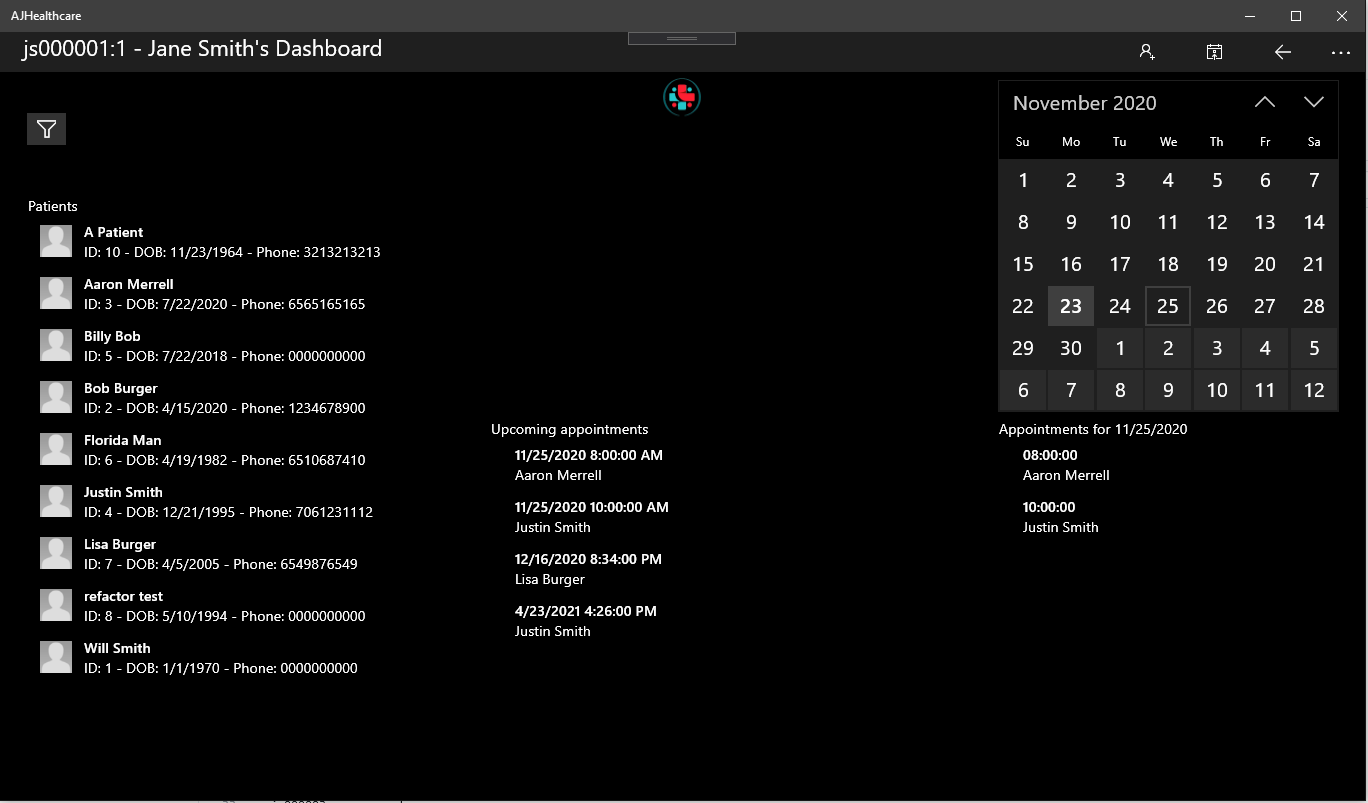
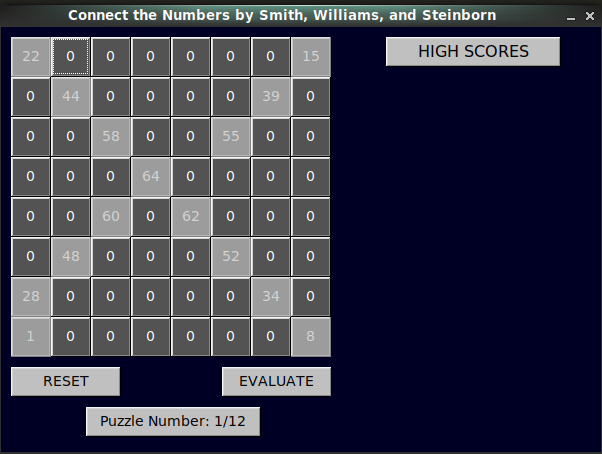
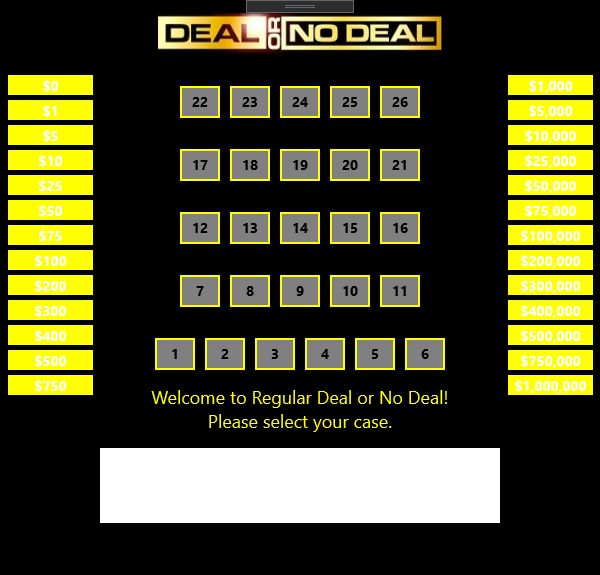
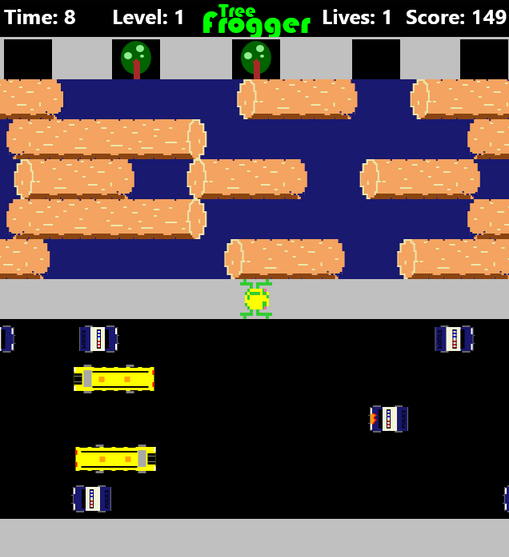
A complete record of the original portfolio projects—preserved, clarified, and organized by language.

Field notes / Methods
Short principles distilled from repeated delivery, operations, and team-enablement work.
A platform is not defined by its first successful deployment. It is defined by how little bespoke work the next deployment requires.
Design the variation points deliberately, keep shared behavior centralized, and make the safe path the easy path.
Teams move faster when change is inspectable before it is consequential. A useful preview replaces guesswork with a shared object for review.
Show the diff, isolate the experiment, stage the rollout, and decide how to recover before pressing go.
Solving an issue for someone returns their afternoon. Explaining the system, capturing the path, and improving the tooling changes every afternoon after it.
Answer the question, teach the model, and leave a trail the next person can follow without asking.
Education / 12 courses
The complete coursework collection from the original site, moved into an expandable reference instead of the main narrative.
An interdisciplinary foundation in computer science and English literature, recognized through Dean’s List study and extended through research, technical leadership, and practical project work.
Paired computer science with an English Literature minor and earned Dean’s List recognition—an early foundation for treating clear writing, close reading, and precise technical work as the same discipline.
Used regression, decision trees, ensemble methods, and cross-validation in a student research program, then presented the findings at the 2020 undergraduate research conference.
Served as Secretary and Treasurer for the university chapter of the Association for Computing Machinery from 2019 through 2021.
Coursework register 12 courses
The design and implementation of web pages and sites: foundations of human-computer interaction; development processes; interface, site and navigation design; markup and style-sheet languages; site evaluation; introduction to client-side scripting.
System-level software development. OS processes, network communication, file-system organization and manipulation, and script programming.
The software development life cycle and contemporary software development methods. Software engineering standards. Management of software development projects.
Programs for hardware-constrained platforms, including NES and C64 games, tiles, animated sprites, music, images, and sound effects.
The craft and science of software construction: effective practices, principles, and patterns for correct, understandable, testable, and maintainable object-oriented code across programming paradigms, languages, and system architectures.
Problem-solving methods in artificial intelligence with emphasis on heuristic programming, production systems, neural networks, agents, social implications of computing, and professional ethics.
Systems architecture and its impact on software execution: digital logic, machine-level data, assembly organization, memory systems, I/O and communication, and CPU implementation.
Data structures, algorithm analysis, induction and recursion, complexity, logic, proof techniques, sorting, relations, graphs, search, automata, regular expressions, context-free grammars, and NP-completeness.
Foundations and applications of distributed and cloud computing, including multithreading, scheduling, synchronization, network architecture, distributed services, cloud services, and internet-scale computing.
Relational database theory, design techniques, query languages, transaction processing, distributed databases, privacy, and a project in database design, administration, and development.
Neural networks with TensorFlow: optimization, tensors, Keras, loss functions, image classification, activation functions, regularization, convolutional and recurrent networks, LSTMs, spiking networks, and a CNN image-supersampling final project.
Core computer-science knowledge, teamwork, and professional practices applied through the implementation of a large-scale project.